Write light.Ship intelligence.
The only training lab where semiconductor engineers move from CMOS to photonic integrated circuits — routing waveguides, tuning resonators, and deploying optical neural networks on real silicon.
Covers industry tools
Course Modules
Hover any card to reveal learning outcomes and toolchain. Filter by your career track or preferred simulation stack.
Silicon Photonics Fundamentals
From electrons to photons
Transition from CMOS intuition to photonic design principles. Covers waveguide modes, propagation loss, and the photonic design kit (PDK) workflow.
Learning Outcomes
- Define TE/TM modes in silicon wire waveguides
- Calculate propagation loss for given geometry
- Navigate a commercial PDK library
- Tape out your first passive component
Ring Resonator Design & Simulation
Coupling, Q-factor, FSR mastery
Design add-drop multiplexers and wavelength-selective switches. Run FDTD sweeps to characterize coupling coefficients across fabrication corners.
Learning Outcomes
- Sweep coupling gap vs. Q-factor in FDTD
- Design for target FSR at 1550 nm
- Compensate thermal drift with microheaters
- Generate GDSII layout from simulation params
Optical Neural Network Architectures
Inference at the speed of light
Implement Mach-Zehnder interferometer meshes that perform matrix-vector multiplication in the optical domain. Benchmark inference-per-watt against GPU baselines.
Learning Outcomes
- Map weight matrices to MZI phase settings
- Simulate a 4×4 unitary optical transform
- Measure inference energy at 10 TOPS/W
- Quantize weights for fabrication tolerance
Photonic Interconnects for Data Centers
400G to 1.6T optical I/O
Design silicon photonic transceivers for hyperscale data center interconnects. Covers co-packaged optics (CPO), grating coupler arrays, and thermal management.
Learning Outcomes
- Design 8-channel WDM transceiver layout
- Simulate insertion loss budget for CPO
- Optimize grating coupler for SMF-28 fiber
- Model thermal crosstalk in dense arrays
FDTD Simulation Mastery
Lumerical from first principles
Go beyond default settings. Master mesh refinement, boundary conditions, and parameter sweeps that cut simulation time by 60% without sacrificing accuracy.
Learning Outcomes
- Configure conformal mesh for curved geometries
- Run parallel sweeps on HPC clusters
- Extract S-parameters and export to circuit sims
- Validate against published experimental data
Photonic Layout Automation
PIC design at scale with Python
Replace manual GDS editing with parametric Python scripts. Generate entire PIC layouts programmatically using PICwriter and IPKISS, version-controlled in Git.
Learning Outcomes
- Script a full MZI array from JSON parameters
- Implement DRC checks in the layout pipeline
- Integrate with CI/CD for tape-out automation
- Reduce layout time from days to minutes
↑ Hover any card to flip and reveal learning outcomes
Which signal are you routing?
Three distinct paths, each calibrated to where you're starting from and where the photonics industry needs you most.
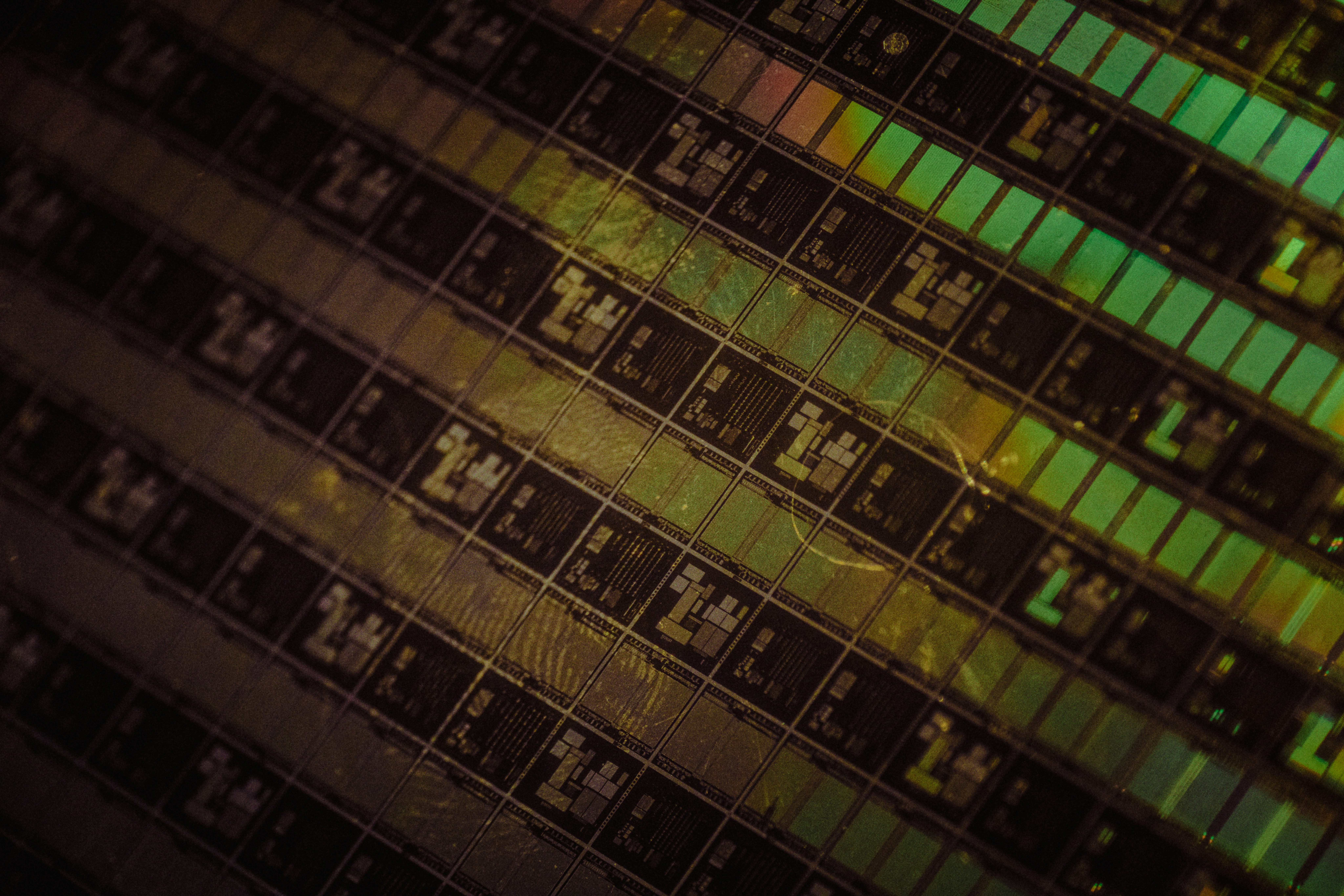
Process Engineer
You know diffusion, etch, and lithography. Now learn to design the waveguide geometries that go into the fab you already understand — and become the rare engineer who bridges process and photonics.
Credential
Certified Photonic Process Engineer
ML Researcher
Your models are hitting the power wall. Photonic matrix multiplication runs at the speed of light with near-zero dynamic energy. Learn to map your weight tensors onto silicon.
Credential
Certified Photonic AI Architect
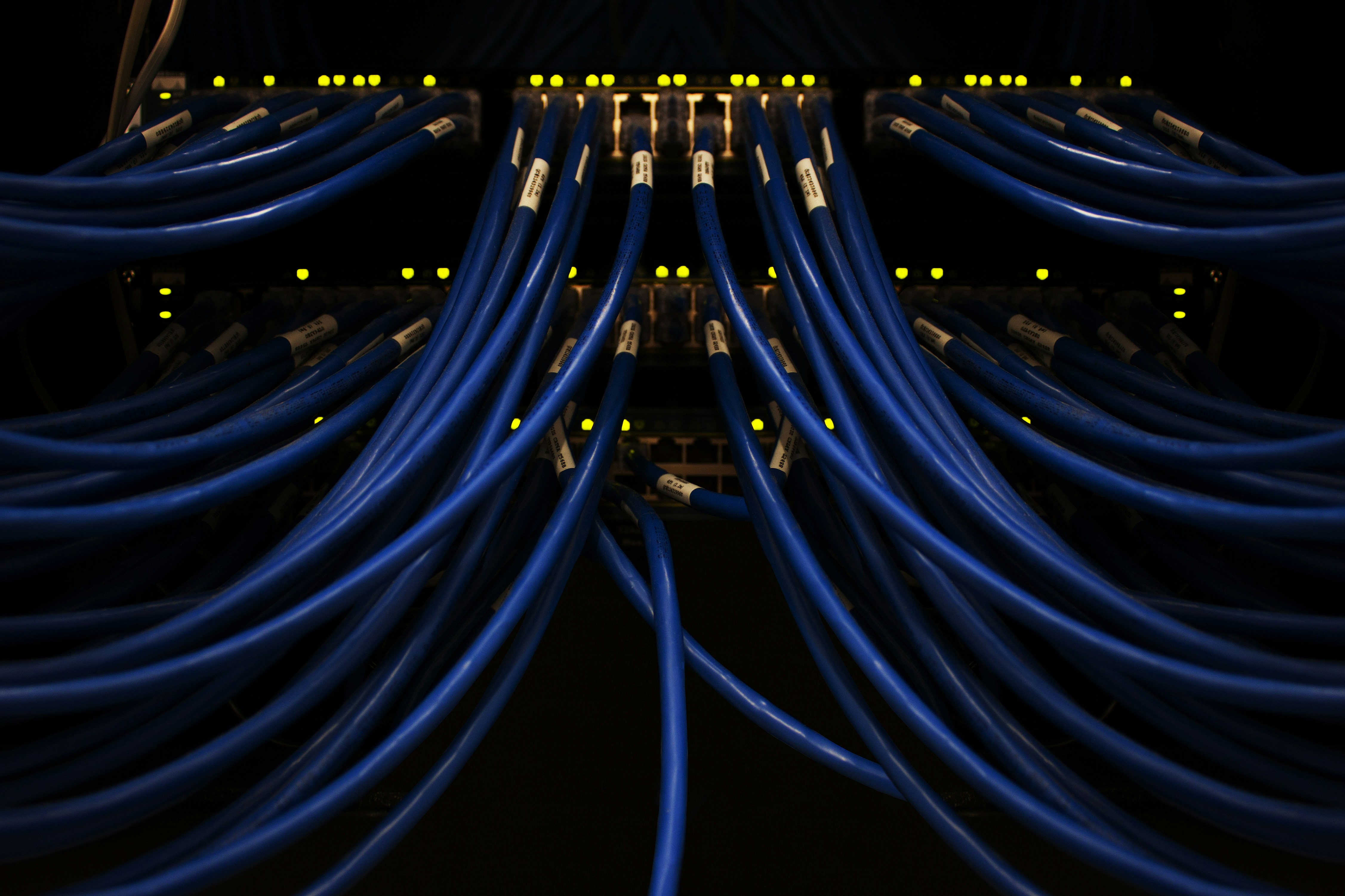
Telecom Architect
Design the 1.6T co-packaged optical engines that hyperscalers are building right now. Master WDM transceiver layout and the grating coupler arrays that connect chip to fiber.
Credential
Certified Photonic Interconnect Designer
Start Your Photonics Path
Tell us where you're coming from. We'll route you to the right starting module.
Silicon Photonics Cheat Sheet
Key equations, waveguide geometries, coupling formulas, and tool API references — one page, print-ready. Used by 1,200+ engineers.
- Mode effective index vs. width lookup table
- Coupling coefficient equations (CMT)
- Lumerical FDTD quick-start commands
- PIC component symbol reference
"I'd been running CMOS process flows for 11 years. Photon gave me the simulation vocabulary to actually talk to the photonics team — and now I'm leading their PDK integration."
Dr. Priya Nair
Senior Process Engineer → Photonic PDK Lead
Intel Fab 34, Leixlip
"My transformer inference cost dropped 8× after I understood MZI weight mapping. The FDTD simulation module alone was worth the entire program."
Marcus Webb
ML Research Scientist
DeepMind, London